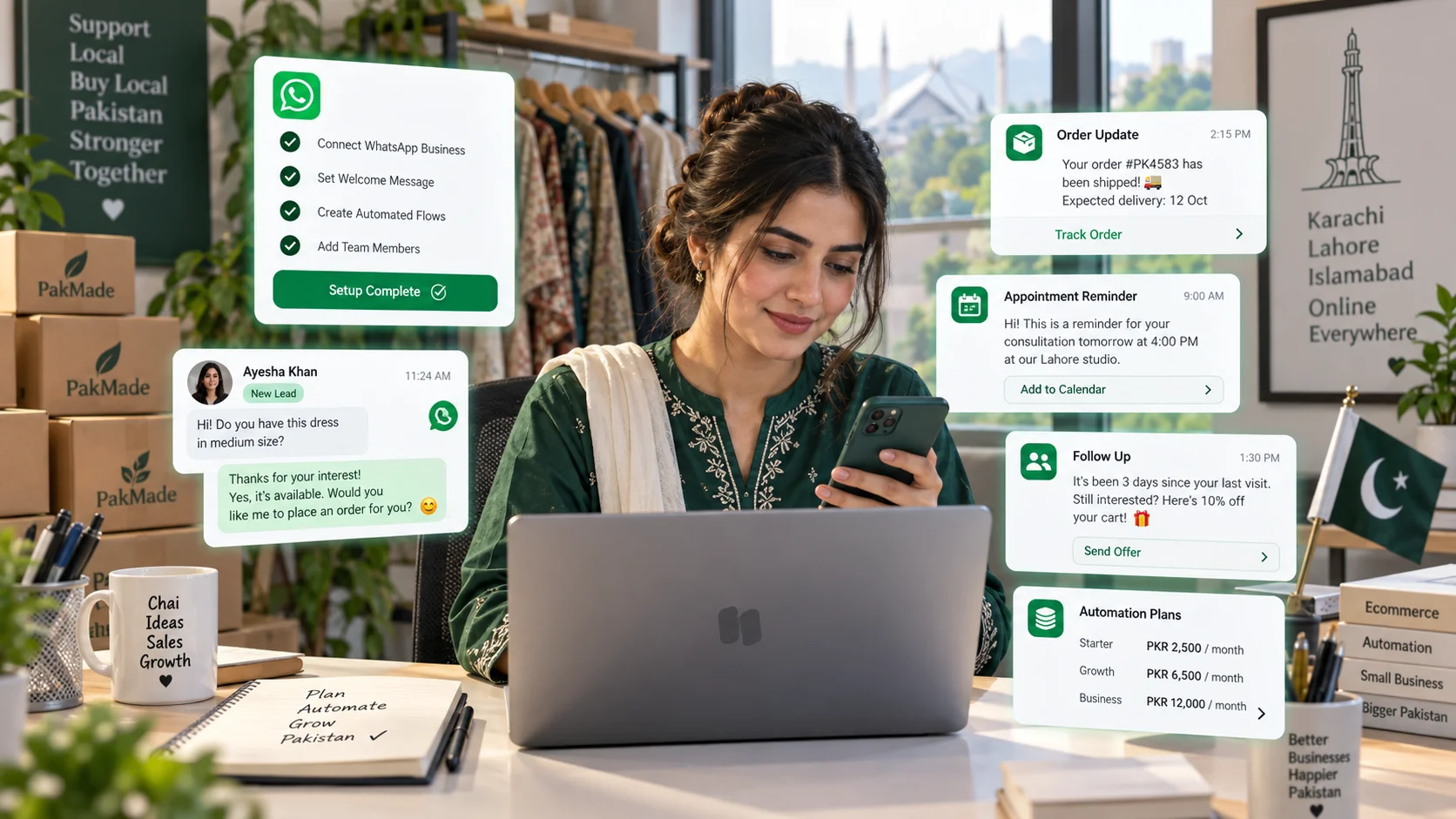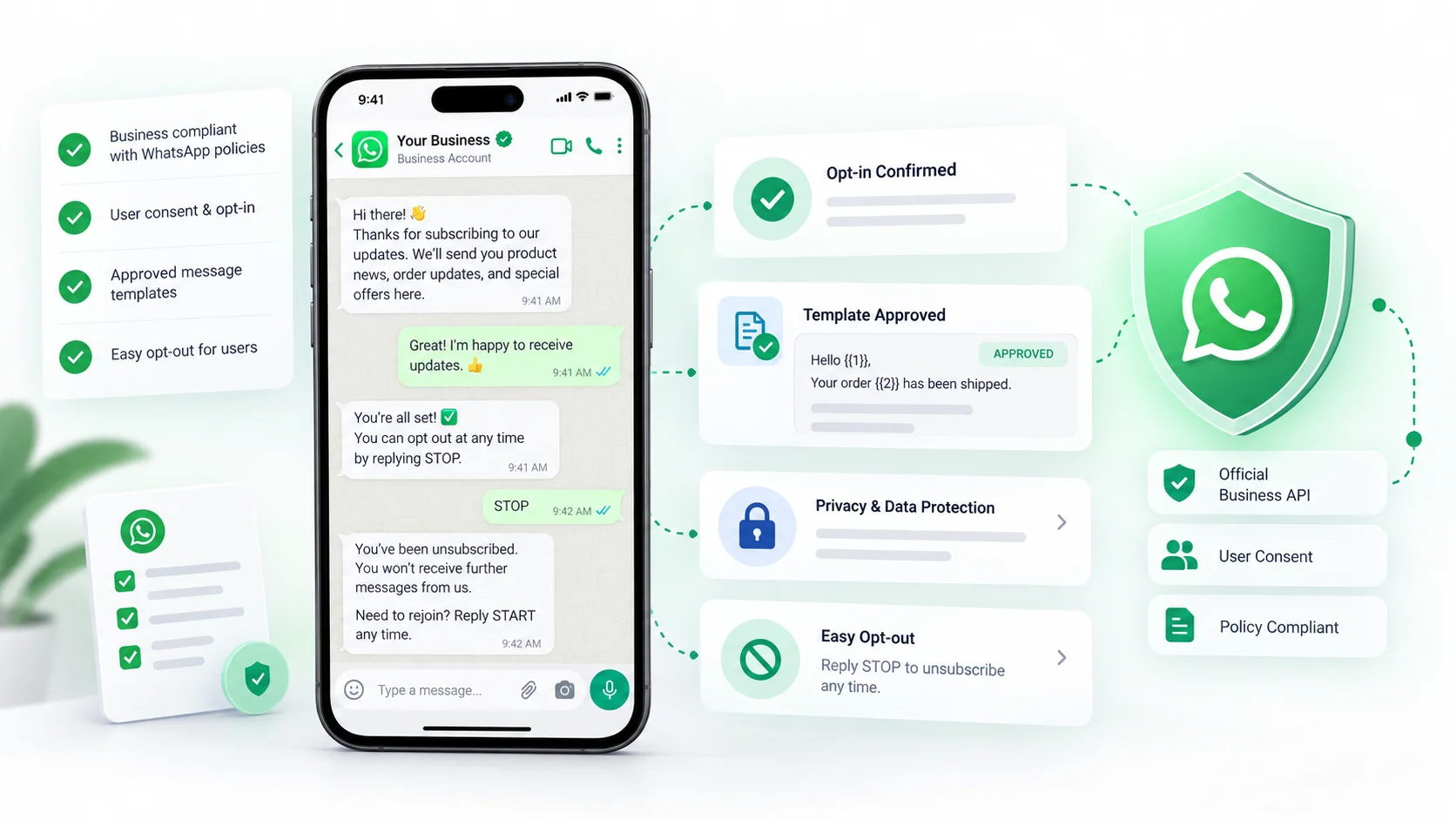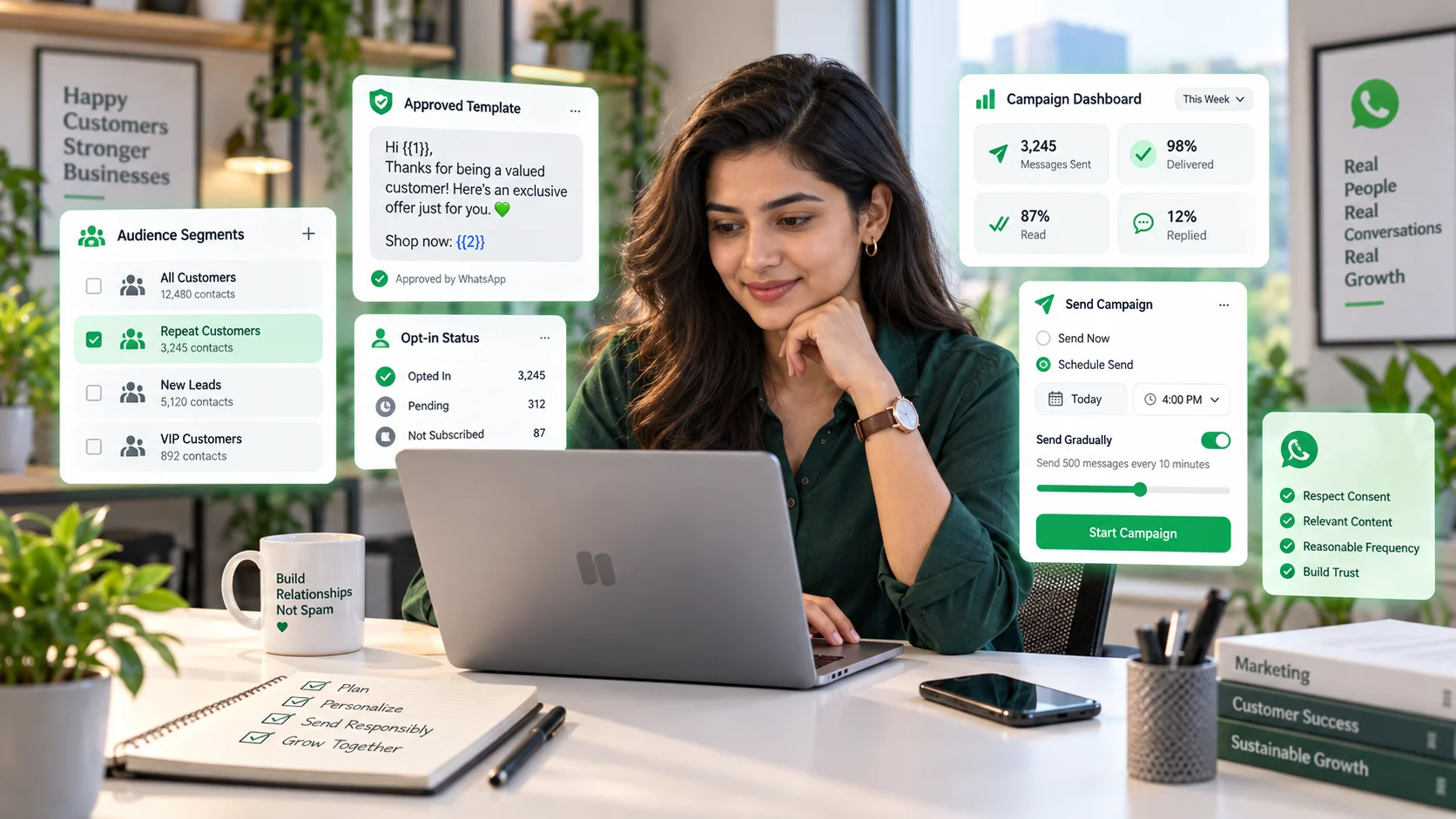
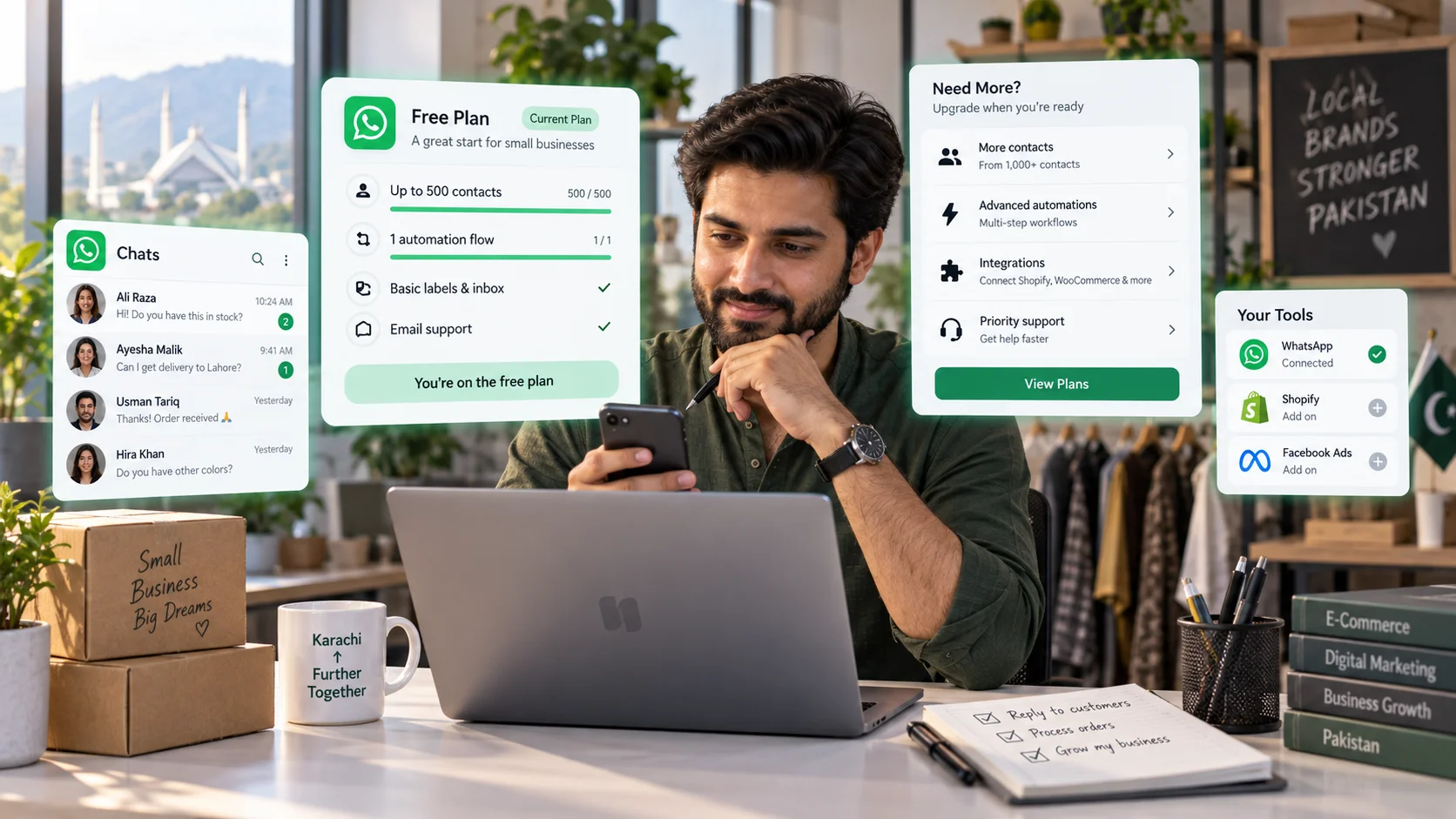
“Free WhatsApp CRM” sounds simple, but it can mean very different things depending on the product.
One tool may offer a free CRM but charge for WhatsApp integration. Another may offer a free trial but limit users or automation. A third may have no subscription fee yet still involve WhatsApp Business Platform messaging costs.
This guide explains the cost layers behind a free WhatsApp CRM so you can compare tools based on total cost rather than a headline price.
Is there a free CRM for WhatsApp?
Yes, there are free CRM products, free plans and free trials that can be used alongside WhatsApp in some form. But that does not automatically mean your complete WhatsApp CRM setup will cost nothing.
There are usually three separate cost layers:
- CRM software cost
- WhatsApp Business Platform usage cost
- add-ons or operational limits
To compare tools properly, you need to understand all three.
1. The CRM itself may be free
Some CRM products offer a free tier for basic contact management, pipelines or tasks. Others provide a trial period so businesses can test the platform before paying.
A free CRM can be useful if your primary need is:
- storing contacts
- tracking deals
- adding notes
- managing simple follow-up
The complication starts when you want WhatsApp messages to appear directly inside that CRM. Native WhatsApp integration, shared inbox features, automation or official API connectivity may sit on a paid plan or require another platform.
2. WhatsApp usage is a separate cost layer
Using the ordinary WhatsApp or WhatsApp Business app is different from operating through the WhatsApp Business Platform at scale.
WhatsApp’s current Business Messaging Policy says business-initiated communication is subject to applicable pricing, and approved templates are required for certain messages outside the 24-hour customer-service window. Pricing rules can change, so businesses should always check Meta’s current documentation rather than relying on an old blog screenshot.
That means a CRM vendor advertising a free plan cannot necessarily make WhatsApp’s own applicable usage charges disappear.
See the official WhatsApp Business Messaging Policy for current policy requirements.
3. “Free” plans often have operational limits
Even when software access is free, the limits can affect whether the plan is useful for a real business.
Common restrictions include:
- one user only
- limited contacts
- limited monthly messages
- no automation
- no team assignment
- no API access
- limited reports
- no ecommerce integration
- branding or support restrictions
A free plan can therefore be excellent for testing but expensive operationally if the team spends hours working around its limits.
Is there a 100% free CRM?
There are genuinely free CRM tiers in the broader software market, but “100% free” usually describes the CRM product—not every channel, integration and business messaging cost around it.
If your goal is simply to store contacts and track leads, a free CRM may be enough.
If your goal is a multi-user WhatsApp operation with an official business integration, shared inbox, automation, templates, analytics and ecommerce context, expect the total setup to include paid components somewhere.
Can you use Google as a free CRM for WhatsApp?
Some small businesses use Google Sheets as a lightweight contact tracker. It is flexible and familiar, but it is not a true WhatsApp CRM.
A spreadsheet can store names, numbers and statuses, but it does not natively solve:
- shared WhatsApp inbox access
- conversation ownership
- message history
- template management
- automation
- routing
- customer-service windows
- agent analytics
For very low volume, a spreadsheet can be enough. At higher volume, the manual effort becomes the hidden cost.
What does a free WhatsApp CRM need to be useful?
A genuinely useful entry-level setup should at least help you answer these questions:
- Who is this customer?
- What did they ask before?
- Who on the team owns the conversation?
- What is the next action?
- Can another agent pick up without asking the customer to repeat everything?
If the free tool cannot answer those questions, it may be a contact database rather than a conversation CRM.
Free WhatsApp Business app vs WhatsApp CRM
| Capability | WhatsApp Business app | WhatsApp CRM |
|---|---|---|
| Basic business messaging | Yes | Yes |
| Simple greeting / away messages | Yes | Usually |
| Multi-agent ownership | Limited | Core use case |
| Customer timeline | Basic chat history | Structured customer history |
| Routing and assignments | Limited | Usually available |
| Business integrations | Limited | Varies by platform |
| Workflow automation | Basic | Can be advanced |
| Team analytics | Limited | Usually available on paid tiers |
When a free WhatsApp CRM makes sense
A free or low-cost setup can be a good fit when:
- one person handles most conversations;
- message volume is low;
- you are validating a new sales channel;
- you do not need complex automation;
- you can tolerate manual data entry;
- you are testing before committing to a full CRM.
When a paid WhatsApp CRM usually makes more sense
Paying for software can be cheaper than operating manually when:
- several agents share the same channel;
- leads are being missed;
- response time matters commercially;
- you need Shopify, WooCommerce or another integration;
- you want routing and automation;
- you need reporting on team activity;
- customers regularly return and history matters.
The question becomes return on workflow, not simply subscription price.
How to calculate the real monthly cost
Use a simple model:
Total monthly cost = software subscription + additional users + WhatsApp usage + automation/AI usage + required integrations.
Then compare that number with the operational value:
- hours saved by the team
- fewer missed leads
- faster response
- reduced duplicate work
- higher follow-up consistency
This prevents you from choosing a “free” tool that costs more in staff time than a paid system would cost in software.
Questions to ask before choosing a free plan
- How many users are included?
- Does it use the official WhatsApp Business Platform?
- Are WhatsApp charges separate?
- How many contacts or messages are included?
- Can I assign conversations?
- Does it keep customer history?
- What happens when I exceed the free limit?
- Can I export my data?
- Which features require an upgrade?
- Does the price still make sense at my expected volume?
How DotsFlow approaches entry-level CRM pricing
DotsFlow separates the software plan from usage capacity so businesses can choose a workspace based on their operational needs and then scale team, message or AI capacity as required.
You can review the current structure on the DotsFlow pricing page.
If you are still deciding whether you need a CRM at all, start with our guide to WhatsApp CRM. If you already know you need a connected setup, the step-by-step integration guide explains the implementation process.
Frequently asked questions
Is there a free CRM for WhatsApp?
Yes, free CRM plans and trials exist, but WhatsApp integration, business messaging usage, automation or multi-user features may involve separate costs.
Is there a 100% free CRM?
There are free CRM tiers, but a complete business-grade WhatsApp setup may still involve platform usage or integration costs.
Is WhatsApp Business free?
The WhatsApp Business app is free to download and use, while the WhatsApp Business Platform has separate business messaging rules and applicable charges.
Is a free CRM good enough for a small business?
It can be. If one person handles a low volume of conversations and the workflow is simple, a free CRM or the WhatsApp Business app may be sufficient.
Final takeaway
Do not choose a WhatsApp CRM based on the word “free.” Choose it based on the cost of the complete workflow you actually need.
A free tool is valuable when its limits match your operation. Once workarounds, missed conversations and manual coordination start consuming staff time, paying for the right system can be the cheaper option.